








What is SSL certificate and why do I need one?
6th August 2021
Have you heard of an SSL certificate but aren't really sure why you need one or what it is? This blog post is here to help. We'll explain what SSL security is, why now is the time to get one and how we can help you.
What is SSL security?
SSL Security is a way of protecting data. In the beginning, all website traffic was whizzing around with very little security. Indeed, in the past with the right equipment someone could tap into your phone line and view anything that you were downloading. Nowadays it's not as easy to listen in on someone's line – however, with the advent of things like buying/selling online and online banking the rewards for getting access to someone's data is far greater. Over the years security has been vastly improved by encrypting online communications. This means that in the past someone could have intercepted and read your communications in plain text; nowadays the data can be made impossible for that person to understand. This is done using a special code, and only the intended recipient can unlock it and view what you have sent. You can think of it as the enigma code of the digital age. You may have noticed that we said "can be made impossible" rather than "is made impossible", this is because not all internet traffic is protected in this way. For the data to be protected you need something called an SSL certificate. An SSL certificate is basically a code that jumbles up all your data and then allows the data to be un-jumbled only by the person you intend to open it.
It's important to understand that although this is preferable (let's face it, no one has ever complained about being extra secure), it is not required in all cases. For example, if your website doesn't have any private information being exchanged with the user, then all someone listening in would be able to see is what they could see just by visiting your website. However, with SSL the person listening in wouldn't easily be able to know even the website you were looking at.
Why Now is the Time to Get SSL?
Now is a good time to get SSL as things are starting to change quite significantly. This doesn’t mean that the arguments for having SSL are changing in terms of how secure you are, but because until now people have been largely ignorant as to how insecure their communications online are. Public awareness of SSL has increased due to televised adverts, changes to Google Chrome and the General Data Protection Regulation (GDPR), which adds to and clarifies your obligations when handling people's information.
Public Awareness Campaign
You may have recently seen adverts trying to promote internet security. These adverts say that if a website doesn't have SSL (indicated with the padlock symbol next to the web address) that the company could be a scam. We actually disagree with the point they are making, there are far more legitimate sites without SSL than there are scam sites. More importantly, it's just as easy for a scammer to get SSL as it is for a genuine company. We feel the advert might give people a false sense of security. However, this could influence your customers’ opinions. If someone visits your website and has seen that advert it's quite possible they will be put off buying from you. Below is a link to the televised advert.
Google Chrome and Other Browser Warnings
Another significant factor which makes getting SSL on your website more critical is that Google is soon to introduce a rather scary 'not secure' message. If a website does not have SSL this message will appear next to the web address in the browser's address bar. At time of writing, they only show a padlock and the word secure for sites with SSL. For those without SSL, a small information icon appears which, when clicked, says the site is insecure. Again, we feel that insecure is maybe a little dramatic and needlessly worrying people who are using a site that arguably does not need 'securing'. However, Google's not going to change that wording for us or you, so now is probably the time to get on board with SSL.
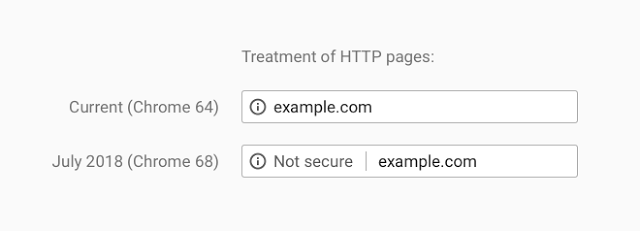
Those two points are a bit more of the stick than the carrot, however, there is some carrot (well, a smallish one at the moment, but in time we think it will grow). Google has said that sites with SSL enabled will receive a positive ranking effect i.e. if you enable SSL, your website will rank higher within search results. Getting SSL, the padlock symbol and the secure message which comes along with it will give you a competitive edge compared to your competitors who do not have one.
GDPR Data Protection
The GDPR requires you not only to be clear and transparent about the information you collect about your website visitors, but also to keep it secure. While SSL isn't the answer to all your obligations under the GDPR, it does help secure the data transmitted between your website and your visitor. You can read more about this in our GDPR guide.
How Do You Get SSL on Your Website?
To enable SSL you need an SSL certificate - these are issued by a certificate authority. The certificate authority charges for those certificates, so there is a cost to having one. These certificates are also similar to web addresses in that you have to pay for renewal every so often.
Are You an Existing Customer or Thinking of Signing Up?
Getting SSL can be complex, but true to our core principles we've created a process whereby we take care of all the technical mumbo jumbo for you. All you have to do is drop us an email and we can get the process started. We are happy to announce that all newly commissioned websites now come with SSL as part of the package. For existing customers, there is a small setup fee and a small increase in your monthly fee to cover the renewals.